The authentic and timeless world of Ralph Lauren
Fall 2026
RL/Sport

The Golden Era Of Woodies 

How the humble wood-paneled station wagon became the official car of the North Woods (and 1960s California surfers).

By Josh Condon
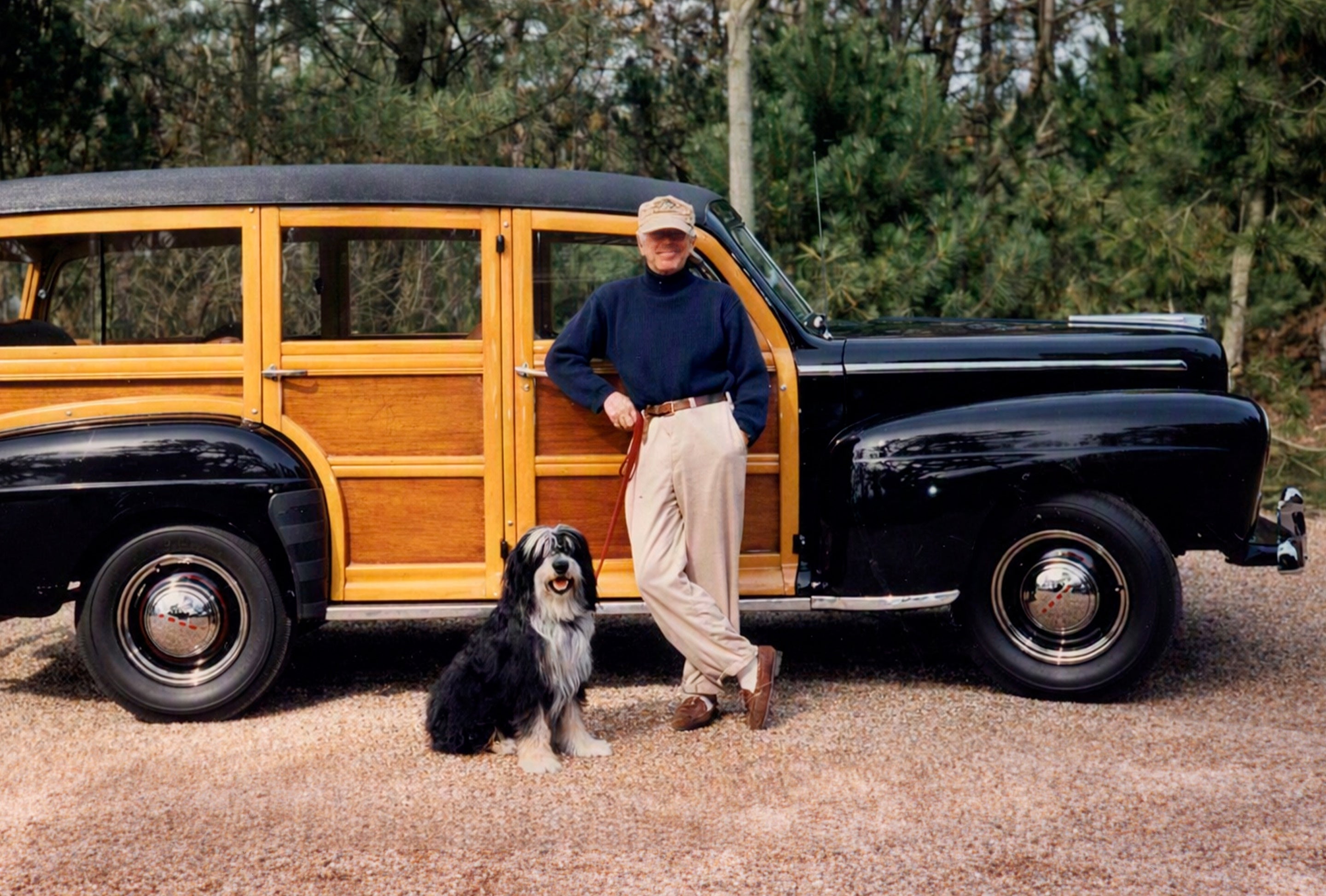
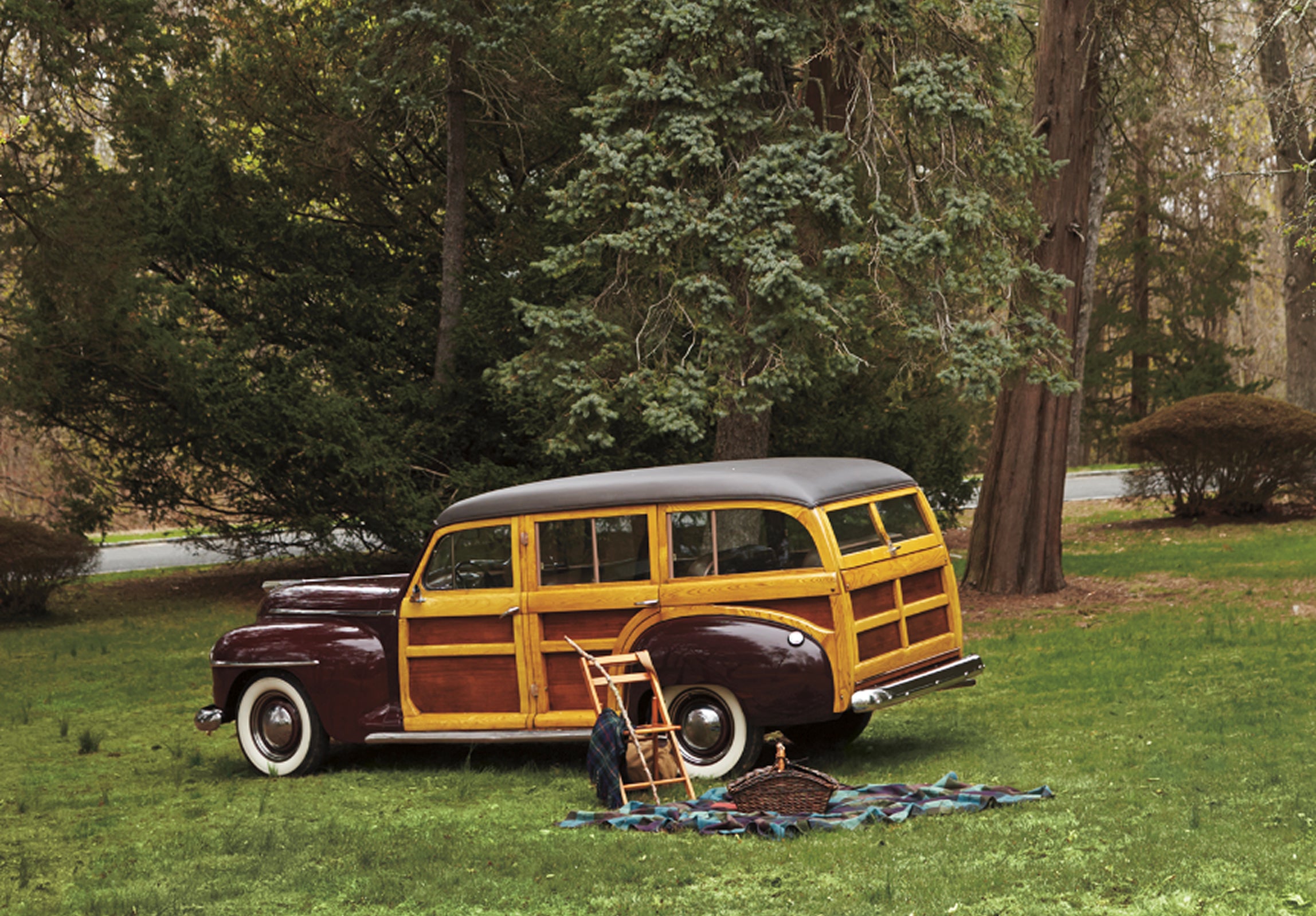
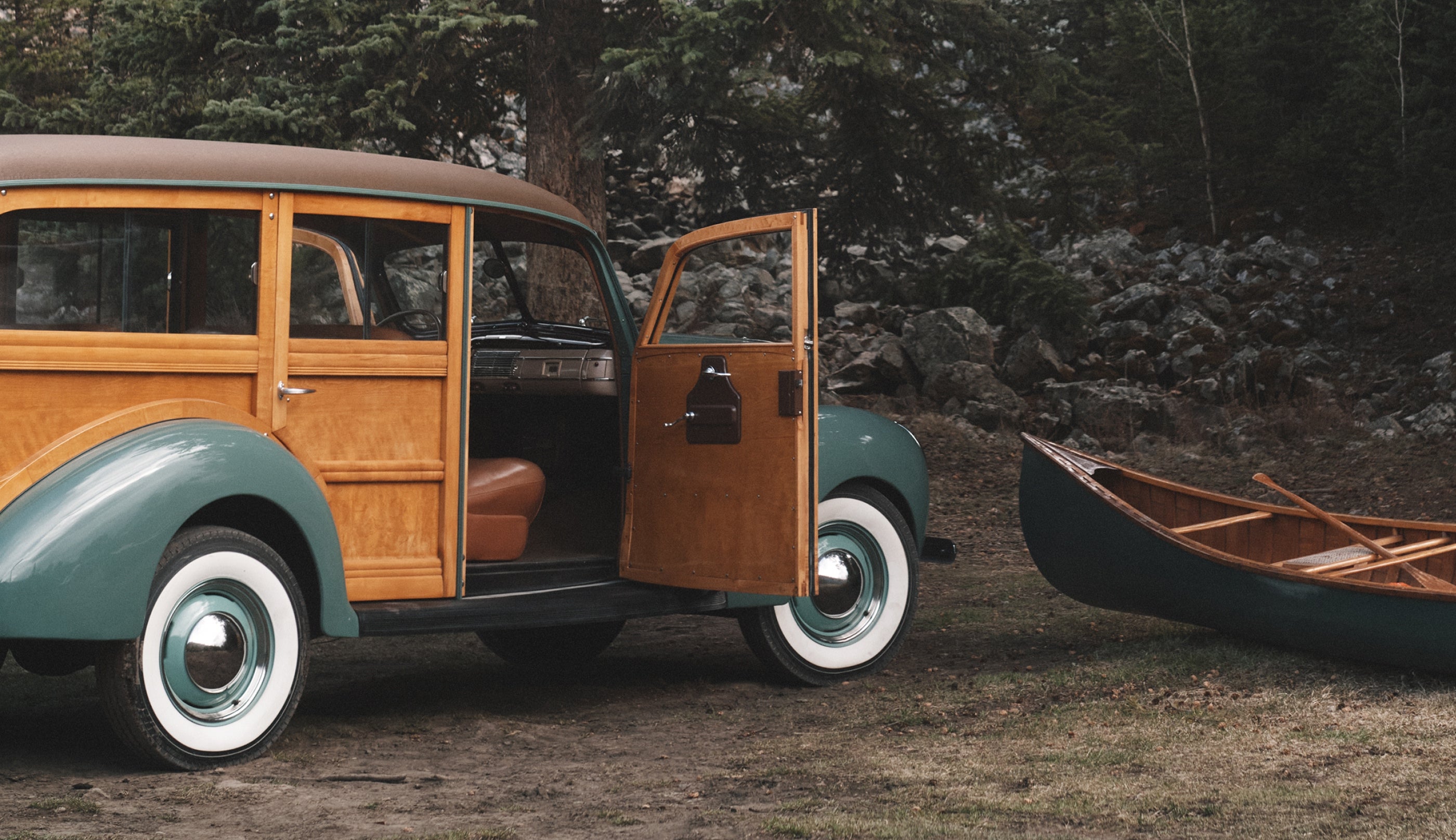
Inside a pristine garage about an hour north of Manhattan that holds some of the world’s great cars—a selection of iconic Ferraris that would make Enzo weep; prewar Bugattis that gleam like carved onyx—there sits an old station wagon. Shiny, hunter green, bulging like a sack of apples. Or so it appears from across the room. On approach, as with a Koons sculpture or an NFL lineman, the proportions remain recognizable but the scale balloons. The wagon is so tall, so long and gargantuan; it seems partly descended from a school bus. Which would make the other parent, at first glance—an armoire? Then it clicks, the massive chrome grille, black inner-tube tires, and several feet of lustrous carved wood helping park the vehicle squarely in the mind’s eye. It’s a 1948 woodie wagon, backdrop to countless old surf movies, outdoor catalogs, and vintage menswear ads, road-going symbol of the country’s postwar economic boom, American as apple pie. The vehicle was added to the garage (which houses Ralph’s collection of cars) in 1991, a family-hauler among a curation largely focused on speed and luxury, yet one Ralph has described as both capturing “the spirit of living in the country” and “the dream of the automobile” for the way it inspired notions of movement and freedom for him in childhood. Much like apple pie itself, the woodie traces its roots to Europe—specifically, the mid-19th-century wood-bodied “shooting brake” carriages designed to transport hunters, dogs, and equipment across British estates. At the dawn of the Motor Age, early carmakers offered buyers the bare minimum: an engine, a chassis, and running gear. Vehicle bodies were the purview of commissioned coach-builders, who reacted to the advent of the automobile by adapting their carriage designs for these new “horseless” carriages. Customers who wanted a motorized version of the shooting brake got a wooden body that was long, upright, and largely open, with multiple rows of bench seating and plenty of space for passengers, pets, and luggage. These direct precursors to the woodie quickly became known in America as “depot hacks” thanks to their popular use as a sort of turn-of-the-century hotel shuttle van, used by grand lodges and resorts from California to the Adirondacks to ferry well-heeled guests to and from the local train depot (“hack” being short for “hackney cab,” which is the British term for a horse-drawn coach for hire, and was carried over to automobiles). Many of these early versions were custom-built on the Model T chassis, Henry Ford’s original “Tin Lizzie” that accelerated the transition to mass-produced vehicles, but by the time the famed Detroit automaker had transitioned to his new Model A, in 1927, production technology had advanced to the point where automakers could manufacture certain body components in-house. This soon included factory-integrated wood-bodied wagons, which were an affordable option during the industry’s early decades when complex steel dies, like those needed to stamp metal body panels, remained exorbitantly expensive. In fact, early production vehicles needed so much wood—for body frames, floorboards, wheel spokes, dashboards, and more—that Ford acquired half a million acres of forests in Michigan’s Upper Peninsula to feed the assembly line’s lumber needs.
But the woodie became an icon of Americana for reasons far beyond mere vertical integration. What started from carriage-building tradition and automakers’ efforts to curb tooling costs took on outsize meaning over time, the hybrid steel-and-wood construction coming to represent a heady, only-in-America combination of old-world craftsmanship and new-world technological innovation. By the early 1940s, workhorse woodies in the US like Ford’s Deluxe were being joined by more upscale models such as Mercury’s Eight Station Wagon and Buick’s Super Estate, whose wood grain and visible joinery—not to mention direct lineage to aristocratic English hunting culture—captured the attention of affluent and upwardly mobile sportsmen, motorists, and outdoor enthusiasts. The wood-bodied wagon quickly became advertising shorthand for upscale tourism from the campground to the golf course, with the loaded station wagon itself coming to symbolize a certain American ideal of family vacations and smoothly paved roads stretching off to infinity. But WWII would grind woodie production to a halt. Ford had to retool his Detroit plants to crank out supplies for the armed forces, and the woodworking operation turned to producing experimental stealth gliders, among other projects. By the time the war ended, factory production and technology had transformed so radically that wood went from being a cost-effective body option to a material that was both less robust and more expensive to employ than steel, as well as a new option: plastics. (It’s for this reason that the last-gasp woodies from the late 1940s—Chrysler’s Town & Country models most notably—are considered particularly luxurious and prized by collectors.) By the 1950s, American car culture was ready to turn the page on the woodie’s air of genteel recreation in favor of the sharp angles and soaring fins of the Jet Age automobile. And yet the woodie soon found itself enjoying a second act on the American stage thanks to the rise of California surf culture and its discovery by young Baby Boomers. By the early 1960s, used woodies were plentiful and cheap—and perfectly suited to hauling a bunch of friends and their longboards. What began as a wagon to ferry gents and ladies in riding jackets to an autumn hunt was now carrying twentysomethings to Surf City. Earthy vibes were once again in vogue, and the car became an emblem of the counterculture instead of the establishment, with Gidget, The Endless Summer, Beach Blanket Bingo, and surf rock from the Beach Boys and Jan & Dean cementing the woodie’s new relaxed, hang-loose vibe. What had a mere decade before been the totem for a certain upper crust, tweed-and-pipe respectability was now the literal poster vehicle for dropping out, hanging ten, and thumbing a nose at the Man. Rarely if ever has a single vehicle embodied such diametrically opposed ends of a societal spectrum in such short order.
Today, woodies are featured at elite car shows around the world, including Villa d’Este and the Pebble Beach Concours d’Elegance, which frequently showcases museum-quality Chrysler Barrelbacks, Packard Stations, Ford Super Deluxes, and Mercury wagons of all stripes. While such vehicles hardly approach the auction prices of, say, prewar Alfa Romeos—the most pristine covetable examples might fetch around $500K—collectors prize them not just for their unique form factor and exemplary craftsmanship but their Janus role in automotive history: The American woodie is a Rubicon between the old world and the new, embodying the liminal space between traditional coach-building and the modern factory-produced automobile we know today. And its influence, though rarely discussed, extends far beyond that seminal moment. As the modern automobile increasingly became a product of cost-efficiency and multinational conglomeration, the exquisite workmanship of the period-correct woodie became a sort of aesthetic shorthand for taste and consideration in the form of simulated wood-grain vinyl paneling on everything from 1970s station wagons to the famous Jeep Wagoneer, which established itself as a lodestar in the nascent preppy culture. A large, capacious, high-wheelbase vehicle with wood styling and outdoorsy intentions once again became a signifier of a tastefully sporting leisure class—and arguably kicked off the SUV craze that drives automotive sales to this day. Which is to say that should you ever find yourself with that most rare of opportunities to visit Ralph’s garage and notice a chunky behemoth of a wagon sat amongst the iconic F40s, Count Trossis, and Type 57SC Atlantics, you’ll never need wonder at its place among the firmament. The woodie is not just an artifact of the aspirational American lifestyle, but the very fiber of the modern global automobile, varnish and all.

JOSH CONDON is a writer and editor based in Brooklyn, New York.