The authentic and timeless world of Ralph Lauren
Fall 2026
RL/Sport

Where The Lions Roar

Our man in England, Alex Bilmes, takes to the legendary Goodwood track for a high-voltage spin in a vintage 1966 Shelby GT40 Mk I.
By Alex Bilmes
The most memorable scene in the 2019 motorsports movie Ford v Ferrari is when the actor Tracy Letts, playing Henry Ford II, scion of Detroit auto aristocracy, is treated—or maybe subjected—to a visceral demonstration of the speed and agility of the Shelby GT40, the car whose development he has funded to exact revenge on his bitter rival, Italian legend Enzo Ferrari. His bulky frame squeezed into the passenger seat, Letts, as Ford—Hank the Deuce, they called him—is taken for an impromptu test track spin by Matt Damon, as Carroll Shelby, the racing driver–turned–car designer whose mission is to win the famous 24 Hours of Le Mans endurance race for Ford. Shelby (Damon doing his best Texan) tells Ford he wants his employer to understand “what $9 million feels like.” After a terrifying display of virtuoso driving, Shelby hits the breaks, and the car screeches to a halt. Ford bursts into tears, wracked sobs so uncharacteristic that Shelby appears momentarily stricken himself: Is Mr. Ford OK? Turns out he’s fine. Better than fine. He’s deeply moved, stunned by the velocity, the handling, and the raw power, to quote another son of Michigan, of his family’s fastest creation. He only wishes his daddy, Edsel, could have lived to see this. “I had no idea,” he repeats through tears. “No idea.”
In September, at the Goodwood Motor Circuit near Chichester, in southern England, I had my own opportunity to experience the brute force of a GT40 in action, from inside the belly of the beast. Chris Smith, my unruffled driver from Britain’s Ford Heritage team, went a lot easier on me than Carroll Shelby had on Hank the Deuce, at least as the movie depicts it. “Controlled but spirited,” was Chris’ description of our drive. As we accelerated into a bend, I whooped but I did not weep. But I, too, had had no idea. No idea of the noise, the heat, the cortisol-spiking exhilaration of being driven around a track by someone who knows what he’s doing, in a car that has sacrificed everything (everything except style and beauty) in the pursuit of speed, precision, and, ultimately, victory. Sitting in the passenger seat is like riding in a rocket. Close to the ground, legs straight out in front, your back as good as touching the engine, it’s motoring in the raw. We did one lap. It lasted about a minute and a half, and by the end I was trembling with adrenaline. At Le Mans, the competitors go for a full day and night, way faster than Chris, in the dark, and sometimes in the rain, on the edge of life and its alternative. The courage it must take to do this is almost inconceivable. Not to mention the stamina. The car Shelby used to terrify Ford was a GT40 Mk II prototype, with a 7.0-liter V8 engine. The car I sat in was a Mk I, from 1966, its black and white stripes replicating one of the eight cars Ford took to Le Mans that year. Incredibly, it is street-legal, though at an estimated value of £9 million ($12 million), you might not feel entirely comfortable squeezing it into a parking space outside Trader Joe’s; it doesn’t have wing mirrors, let alone park assist. On the track, Chris tells me, the driving experience is “phenomenal: you feel absolutely everything that the car feels. It’s so engaging, so positive.” The engine generates around 350 bhp, and the car weighs less than 1,000 kg. As a result, says Chris, “It’s rapid.” The occasion for my revelatory 90 seconds: Goodwood Revival, the annual three-day festival of vintage motoring and period costume held on the grounds of Goodwood House, the stately 17th-century home that has been the ancestral seat of the Dukes of Richmond and Gordon for 300 years.
By the end I was trembling with adrenaline. The courage it must take to do this is almost inconceivable. Not to mention the stamina.
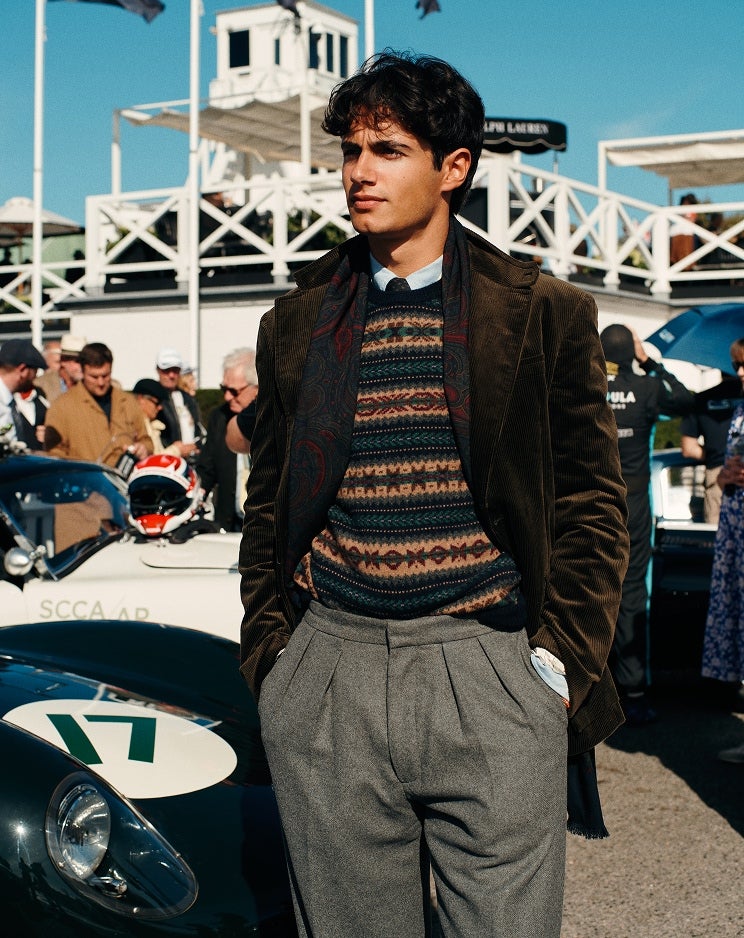
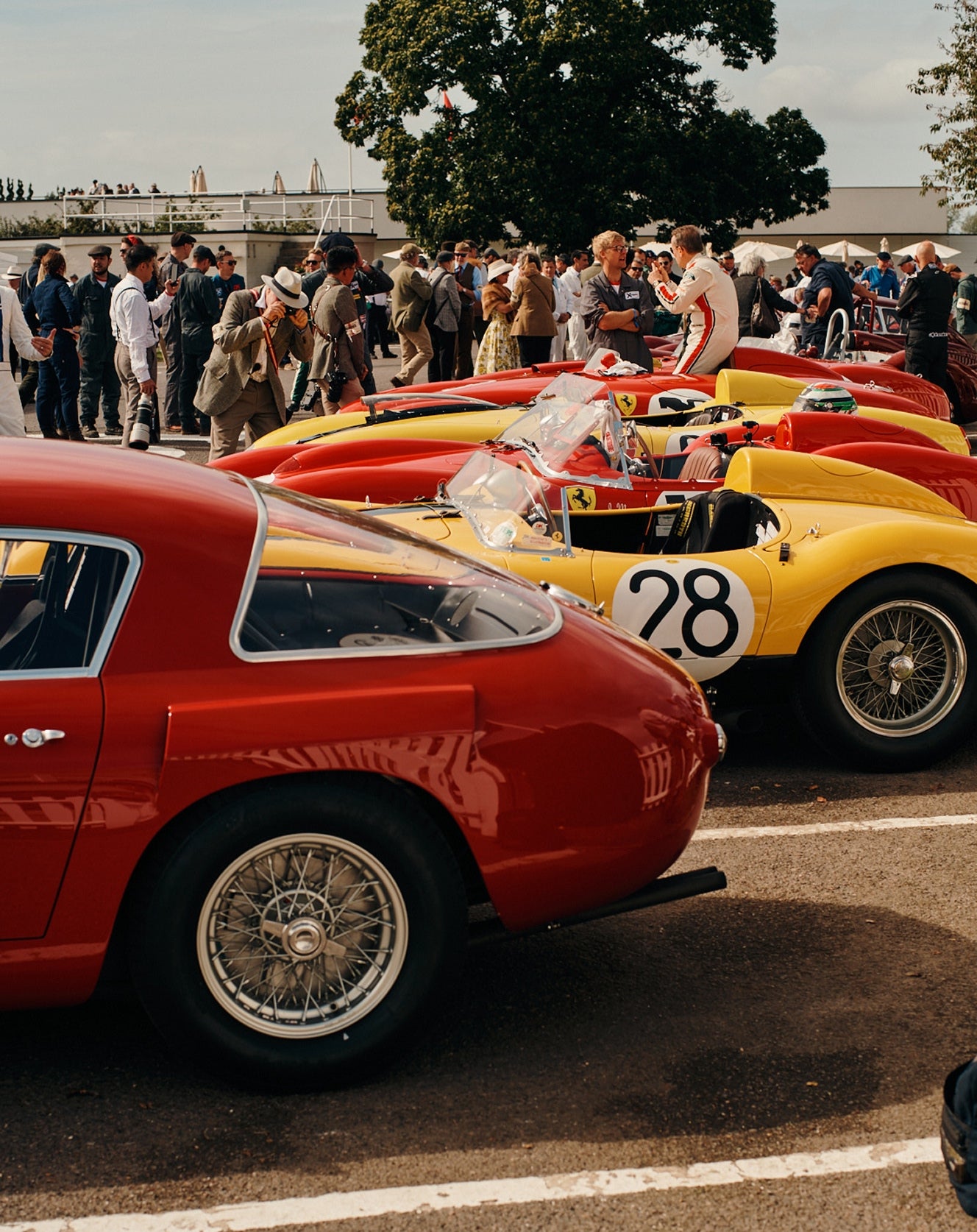
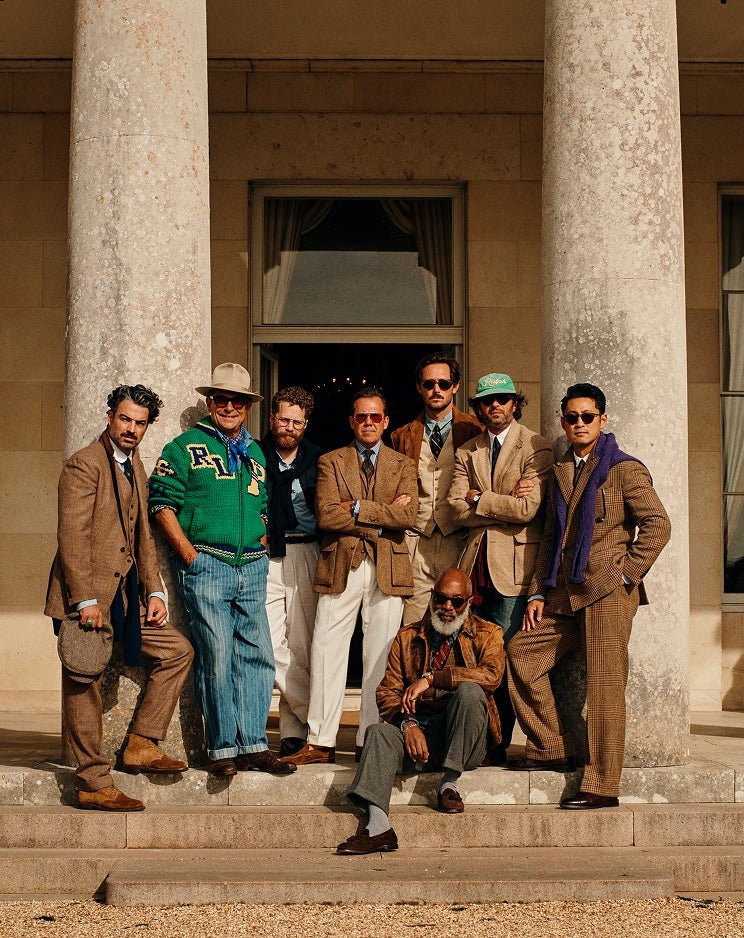
Goodwood is home to more than motorsports—there’s a world-class art collection, a famous horse racecourse, and a golf course—but it’s race cars that are closest to the heart of the present duke, who inherited the title and the house in 1994, revived the motor circuit in the late 1990s, and is the brains behind the Goodwood Festival of Speed, for new cars, and Revival, held each September. Revival is a showcase for cars that would have driven the track in its earlier incarnation, between 1948 and 1966, after which it fell silent for three decades. It’s also a celebration of the sartorial styles of that time, with many festivalgoers arriving in era-appropriate fancy dress. “There really is nothing quite like it anywhere else in the world,” the Duke of Richmond told me at last year’s Revival. “Staging the event in period creates a kind of magic—everyone wants to be a part of it. Wherever you look, people are just having a brilliant time.” The resonance with Ralph Lauren, one of Revival’s sponsors, is obvious: an emphasis on heritage, authenticity, craftsmanship, and style. “It’s like being in a movie,” a fellow guest says to me as we wandered the site, surrounded by costumed revellers, admiring the vintage Maseratis, Aston Martins, Porsches, and many more. In my case, it’s like being in a specific movie. Those who haven’t seen Ford v Ferrari (or Le Mans ’66, as it’s called in the UK) may not know that Henry Ford II’s bid to bloody the nose of Enzo Ferrari was successful. With the help of Carroll Shelby and some exceptional drivers, including a cussed Englishman called Ken Miles, played by Christian Bale in the film, Ford’s GT40 Mk IIs took the checkered flag in first, second, and third positions. Ford was there to see it happen. So was Ferrari.
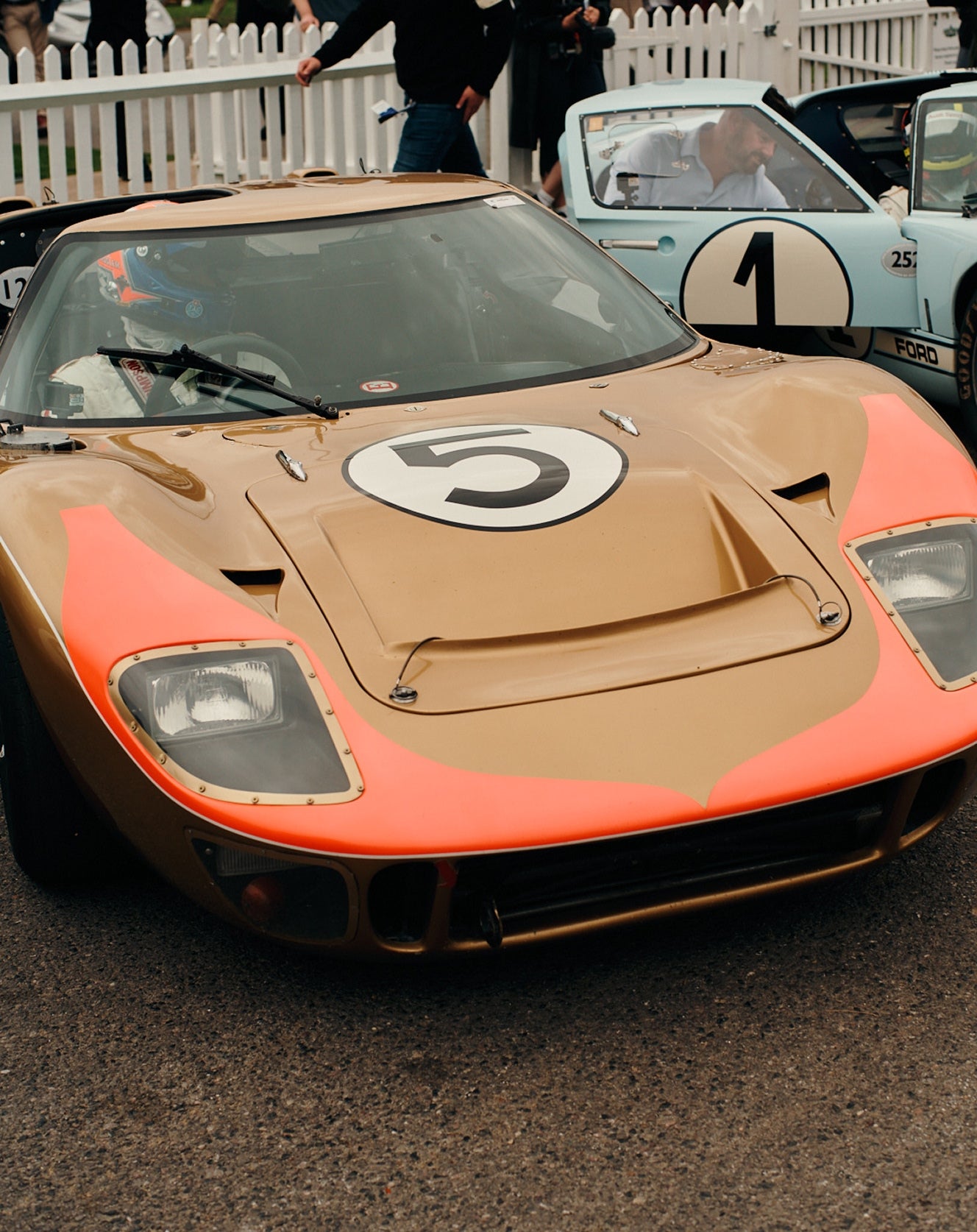
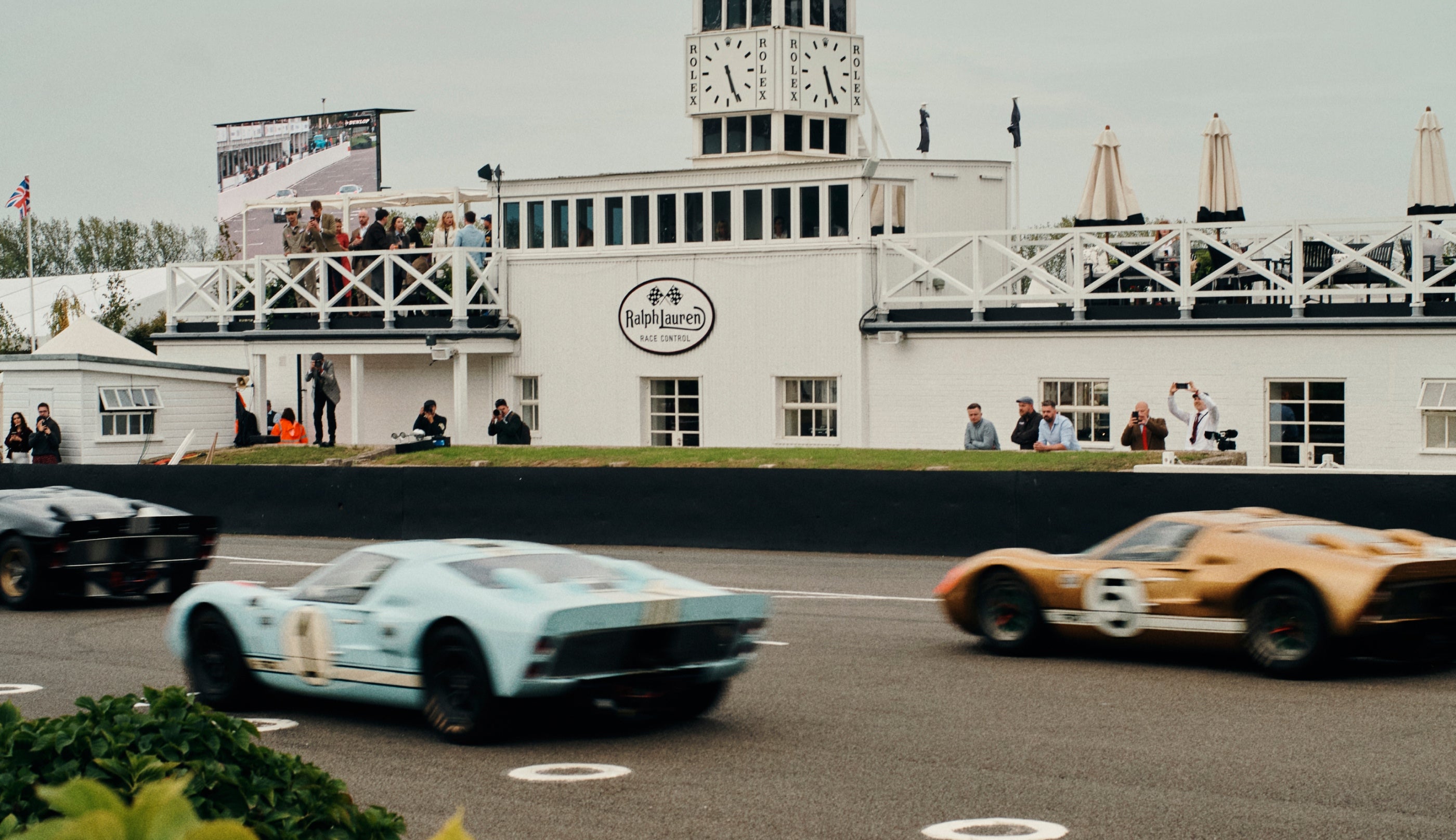
Among the wonders of the 2026 Goodwood Revival: the winning trio of cars from 1966, reunited for the first time since 1969, and shortly to take to the track, one pale blue and red, one black and white, one gold. They are among the most famous cars in endurance racing history. Sixty years old, yes, but somehow still ultramodern, low to the ground, with shark-like noses and bluntly abbreviated rear ends. This reunion is the kind of coup that only Goodwood Revival could arrange. “Anywhere else it might feel inauthentic,” one fellow guest says to me. “Here it makes perfect sense.” Later in the day, idling by the paddock, I meet Gary Bartlett, a significant car collector from Indiana. He is here with two of his cars, a Shelby 427 Competition Cobra, and an exceptionally fine GT40 Mk III from 1968. Given that Bartlett, most notable among American petrolheads as a Jaguar enthusiast, has the means to buy pretty much any car he likes, why did he pick these? “I guess I just love the sound of those American V8s,” he says. I don’t think he’s alone there.

Alex Bilmes is a writer and editor based in London. He is a contributing editor to the Financial Times’s HTSI and previously edited British Esquire.